
How can a reuse shop act as a hub for wellbeing? In many ways, as we discovered during a recent visit to REMO – a social enterprise and charity – in March, Cambridgeshire. Our Projects Manager, Mirella Ferraz reports.
____________________________________________________________________________________
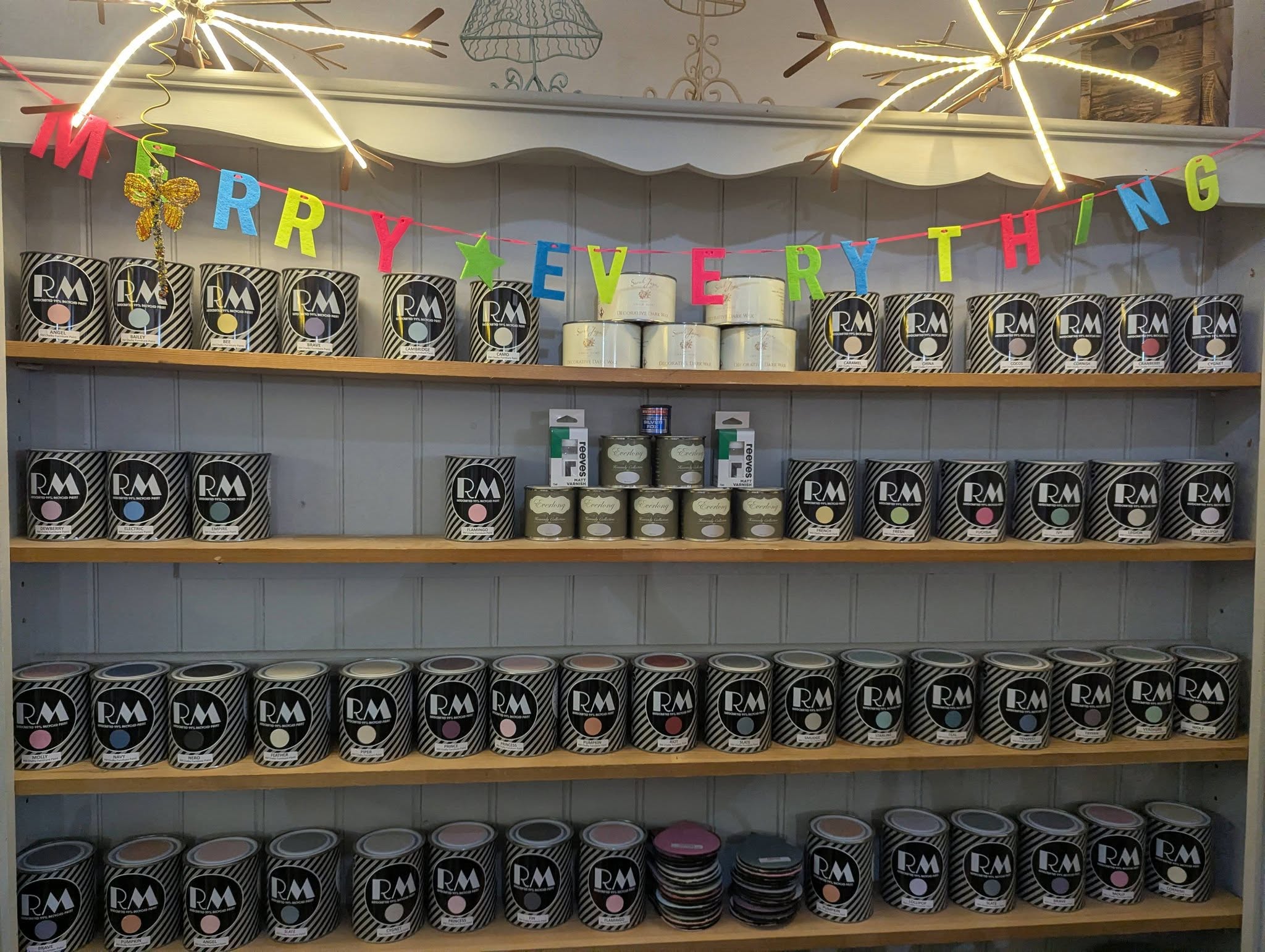
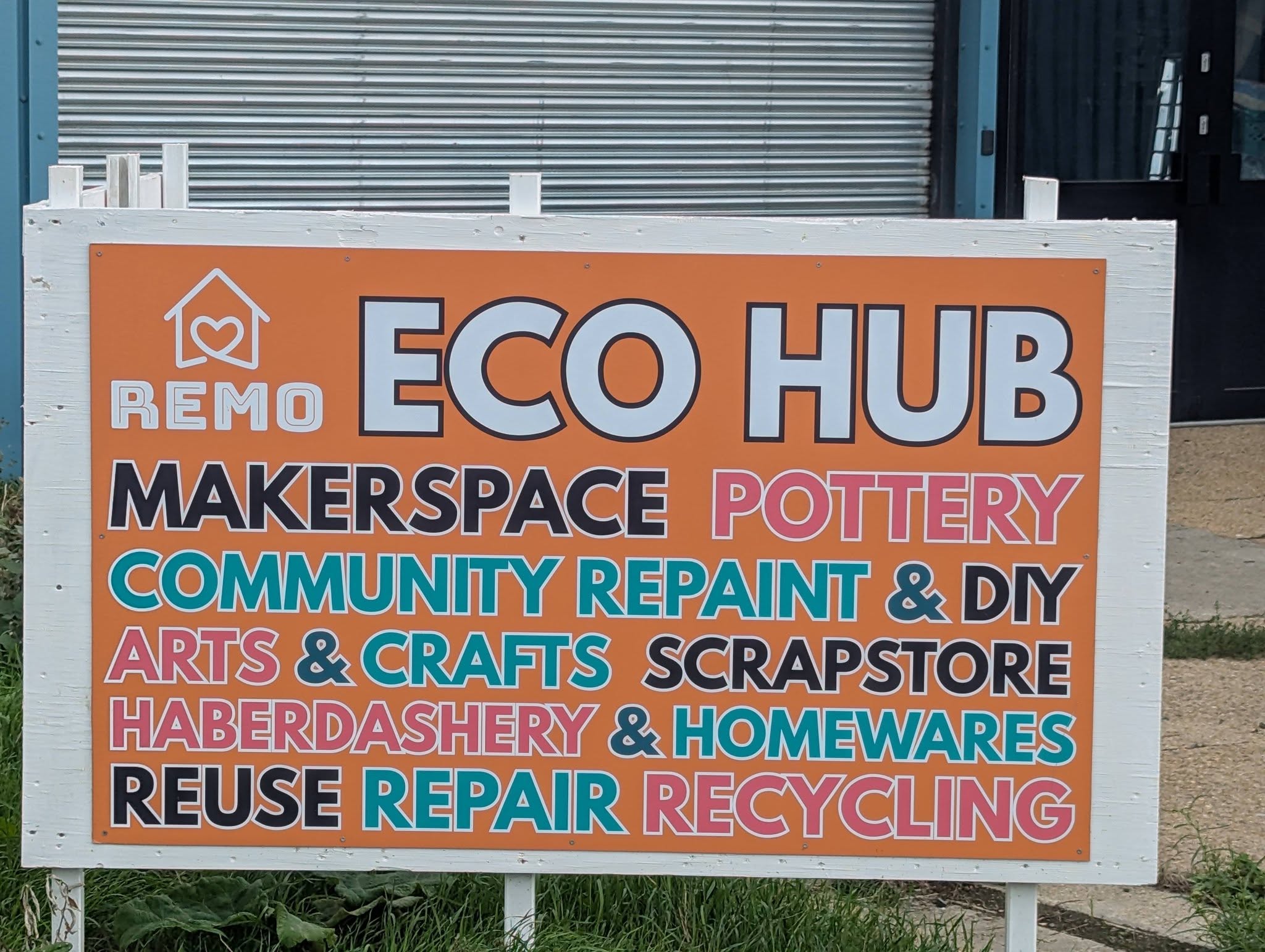
REMO, the trading arm of the Cambridgeshire Community Reuse and Recycling Network, began in 2005 and has grown into a fascinating community-focused reuse project. Alongside its reuse shop, REMO offers second-hand furniture and goods, remanufactured paint, a scrapstore, makerspace, workshops, volunteering opportunities and spaces for social enterprises. There are also plans for a café.
I visited REMO to learn from their experience and explore what lessons could be relevant to the development of reuse and sharing initiatives in Devon, where we’re based.
I’d like to offer a huge thank you to Nikki DiGiovanni, REMO’s Business Development Director, who gave me a generous and inspiring tour,, sharing not only REMO’s successes but also their challenges and the lessons they’ve learn’t from them.
Reuse is about wellbeing, not just waste
It’s easy to think of reuse simply as a way of reducing waste. But REMO demonstrates how much more it can offer.
People need tools and equipment for all sorts of activities that are invaluable for living happy, thriving lives. From DIY to garden parties, from nature study to camping trips; the right tools and equipment are often what makes the difference between achievement and frustration.
Yet tools and equipment cost. Affordable second-hand goods can help people access things they might otherwise struggle to afford. Sharing and reusing resources saves people money. It reduces the need to mine raw materials and cuts the energy use and pollution from manufacture and disposal.
Meanwhile, making and upcycling enables people to express their creativity and learn new skills. It engenders a sense of pride and accomplishment.
And volunteering can help people to develop confidence, connect with others and to feel part of something meaningful.
In other words, reuse and reuse projects can support people as well as the planet.
This is something we see through our own work with the Share Shed – a mobile Library of Things – that makes it possible for people across South Devon to borrow useful items rather than having to buy them. From gardening and DIY equipment to camping and household items, borrowing can empower people to lead better lives while saving money and storage space and reducing the resources needed to manufacture things that may only be used occasionally.
That’s wellbeing in practice.
Borrowing And Making
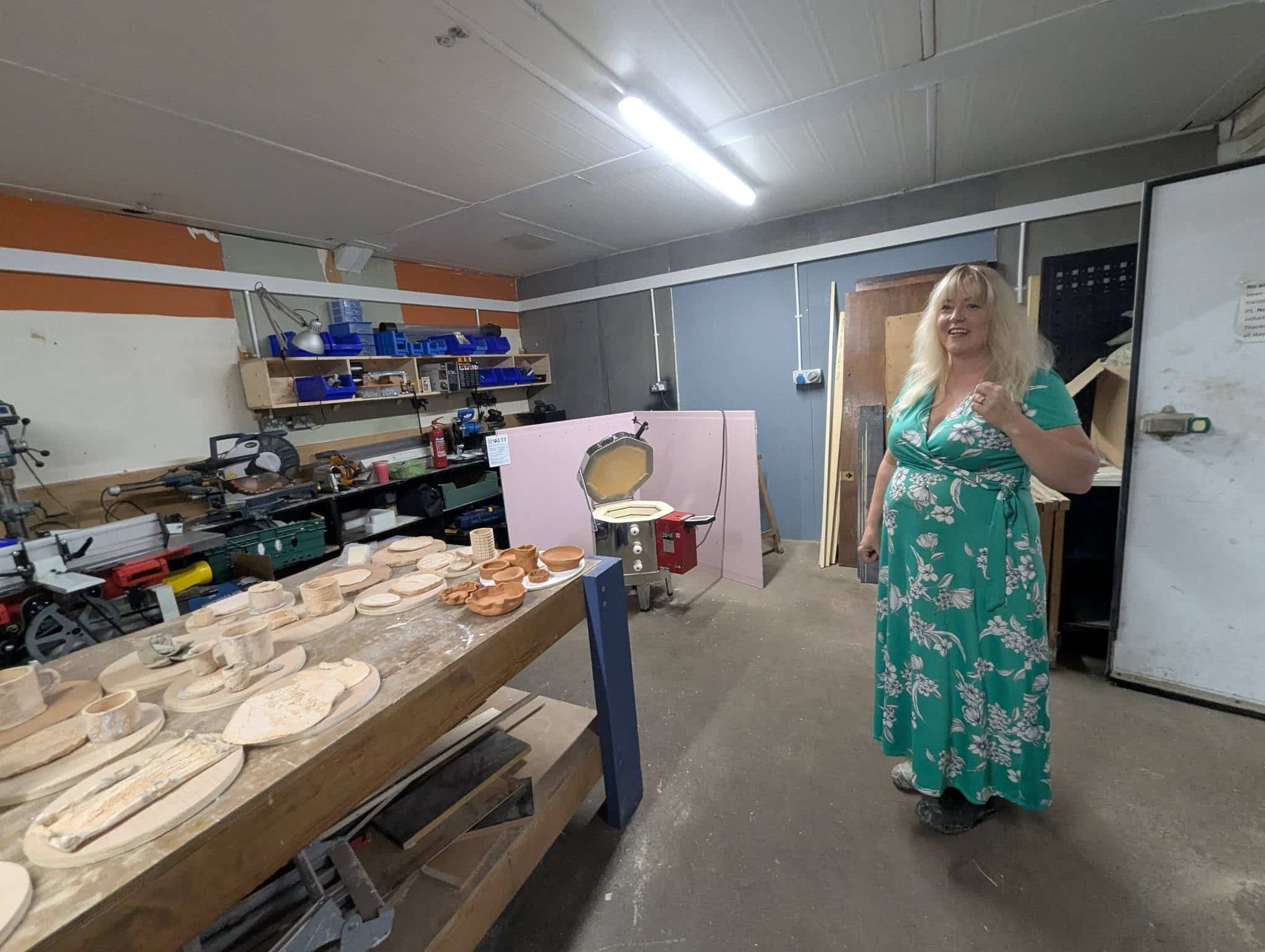
One of the things that particularly inspired me at REMO was its newly launched Makerspace. It offers shared equipment for woodworkers, clothworkers, ceramicists and those working with 3D printing.
This spaces become create opportunities for people to meet, contribute, learn, share their expertise and feel connected to their community.
Creating spaces where people can connect
REMO also reminded me of the importance of physical community spaces.
While Share Shed’s van makes sharing accessible across several South Devon communities, there is something special about having a place where people can come together, browse, make things, learn skills and have conversations.
REMO is exploring the creation of a café at the entrance to its reuse shop, with the idea of encouraging people to come in, spend time and connect.
As Nikki put it: “Come for a coffee, stay for the craft.”
It’s a simple idea, but it captures something important about wellbeing: sometimes what people need isn’t simply a service or a product, but a welcoming place to belong.
Thinking bigger about what’s possible
One of the questions Nikki shared with me really stayed: “If money was no object, what would we do?”
It’s an invitation to dream beyond current limitations and imagine what a genuinely thriving circular-economy community could look like — before working out how to make it happen.
REMO’s journey also demonstrates the importance of persistence, partnerships, good ideas and being willing to try again when opportunities don’t initially work out.
For me, the visit was a reminder that sharing, reusing, making, repairing and upcycling aren’t separate activities. Together, they can form part of a more resilient way of living — one that supports people, communities and the environment.
Looking ahead
As we explore how reuse and sharing initiatives could develop in Devon, REMO has given us plenty to think about.
The future isn’t simply about helping people borrow instead of buy, but about creating communities where resources circulate, skills are shared, things are repaired and people have more opportunities to participate and connect.
At the Network of Wellbeing, we believe that looking after people and looking after the planet can be part of the same story. And Share Shed is already helping make that story a reality.
Borrow, don’t buy. Repair, don’t replace. Share what you own. Make stuff yourself.
Find out more about Share Shed and browse the things you can borrow at www.shareshed.org.uk.
Find out more about REMO at www.remo.org.uk.