

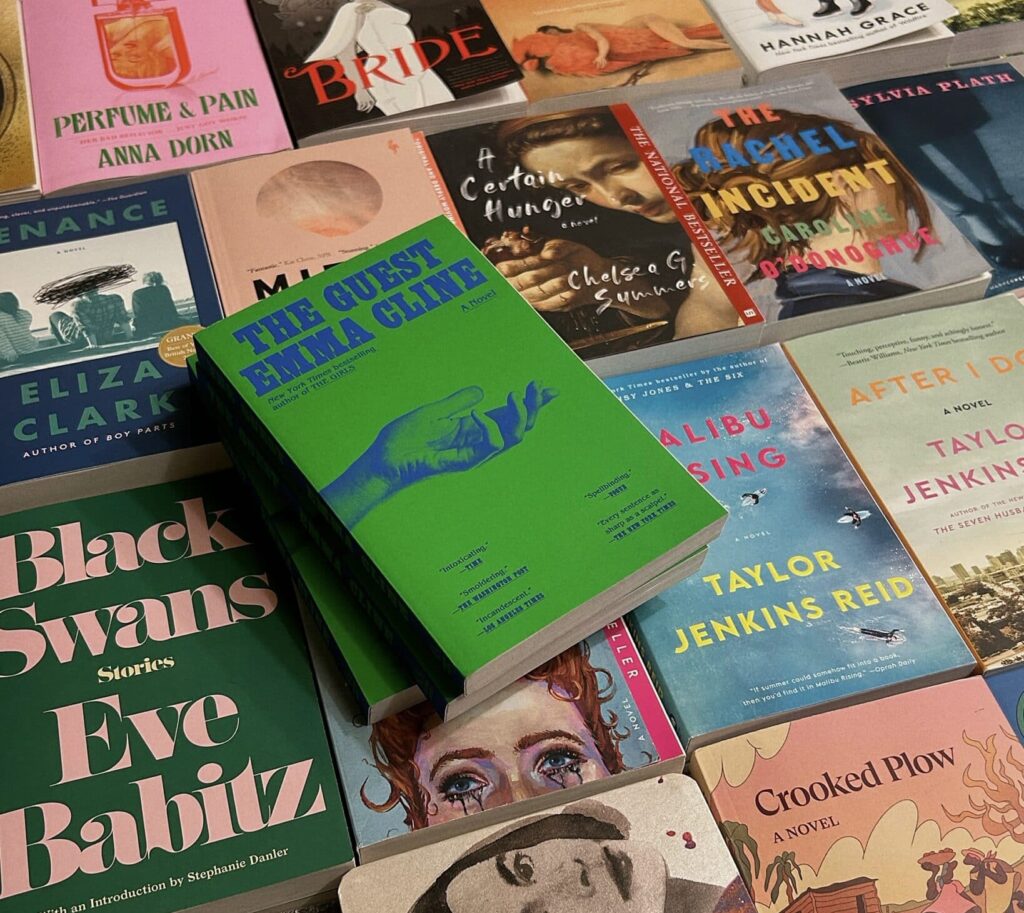
Reading isn’t just for entertainment or education. Studies from The Reading Agency show that reading for pleasure is directly linked to better cognitive performance and mental wellbeing. It can also improve confidence, reduce crime rates, and fascinatingly, improve long-term health outcomes. Manon Martini, Sales and Marketing Manager at The Resurgence Trust – and lifelong reader – writes for us on the healing and transformational powers of reading during challenging times.
I have always recognised the healing power of reading, even before I could articulate it. Since childhood, reading, for me, has always been about running away, facing disaster, and coming home changed. My first proper tête-à-tête with a book came at about 8 years old, when, following the divorce of my parents, my Year 4 teacher, Miss Greene, gave me a copy of The Suitcase Kid by Jaqueline Wilson to read. I still remember the gentle quiet of the library on the afternoon she gave it to me.
I read the book, and it was so sad. I felt for Andy, living in the broken space between two rebuilt families. I resonated with her and her lost sense of home. It hurt to read, but as the only child in my friendship circle with divorced parents, I felt understood by this small and unusual children’s book – I felt I had been given a road map for the challenges I was facing at that time.
Fast-forward to the third national COVID 19 lockdown of 2021, like many, I was faced with a mental health crisis and a raging eating disorder that was destroying my life. Under the control of obsessive food rituals, and unable to see family and friends, I once again turned to reading.
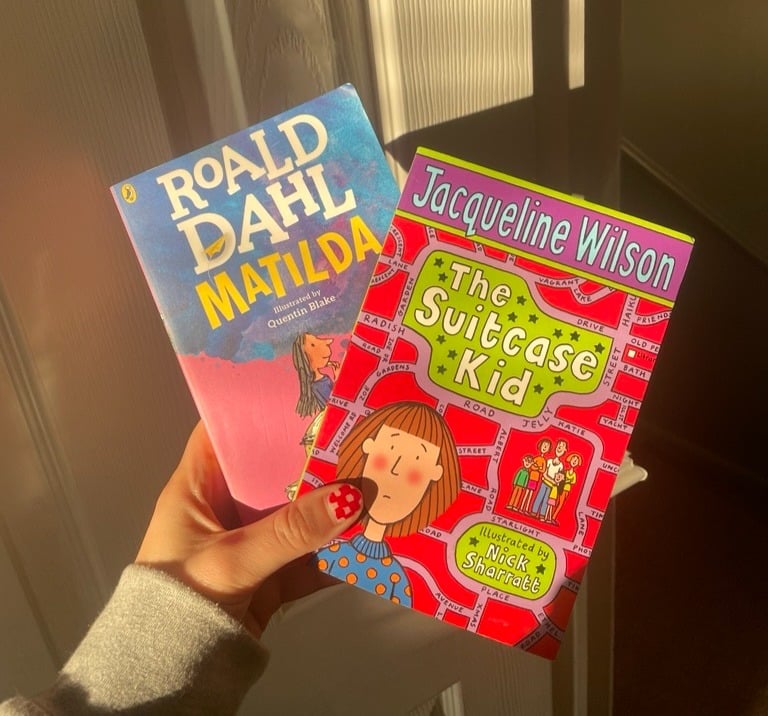
Books of my childhood: The Suitcase Kid by Jacquiline WIlson and Matilda by Roald Dahl. Image: Manon Martini
I truly believe that books have a way of finding you when you need them, and Milk Fed by Melissa Broader found me just when I needed it. A grotesque, erotic and sometimes funny story of self-discovery, body image and desire, this story allowed me to face the parts of my eating disorder which I was least able to contend with and ultimately seek help.
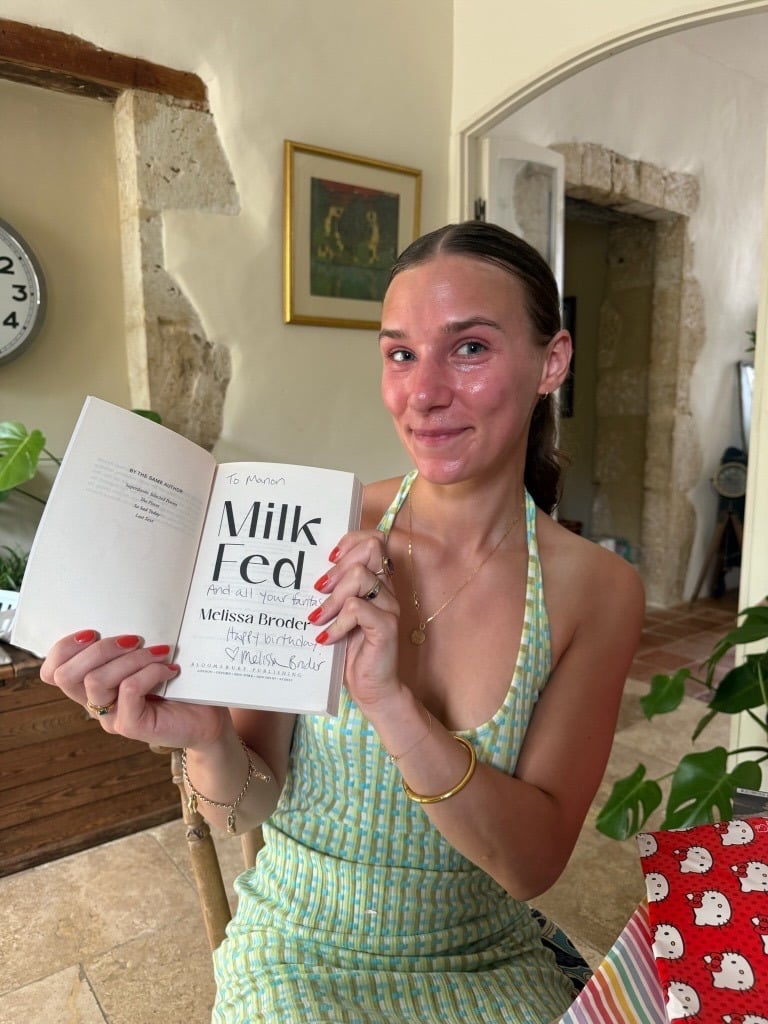
Receiving a signed copy of Milk Fed from Melissa Broder for my 25th Birthday Image: Manon Martini
In a recent panel, Mary Beard, chair of the Booker Prize 2026, controversially said she ‘cannot bear the phrase ‘I really love reading’’. She argues that treating reading as a hobby as opposed to a fundamental need understates its importance to the human psyche. Whilst the Booker Prize continues to be criticised for its elitist and at times alienating views, I do believe that in the context of Reading for Wellbeing, reading can do more than just make us feel good.
Fiction can challenge our worldview; it presents us with hurtful and difficult truths. Reading can be heartbreaking and sad and anything but enjoyable, but it is, in my opinion, an essential pillar for our wellbeing as humans.
So, when I took part in a bibliotherapy course last December with Exeter UNESCO, I felt I was coming from a pretty good launching pad. I learnt in detail about the wide use of books, particularly fiction, as a tool for enhancing wellbeing, processing difficult emotions and coming to terms with the world around us – and how to put these tools into action within our lives.
Whilst the course taught me a lot, one certainly doesn’t need a bibliotherapy qualification to understand the therapeutic qualities of books; as I mentioned, I understood this structure in some sense from a very early age. Studies from the Reading Agency show that ‘reading for pleasure’ is directly linked to better cognitive performance and mental wellbeing; it increases confidence, reduces crime rates, and, incredibly, higher reading rates in children have been associated with better long-term health outcomes, including a lower risk of chronic diseases like type 2 diabetes.
In practice, bibliotherapy encourages conversation between a client and a therapist, with the end goal of prescribing them a fictional title to help them through what they are experiencing. Often, the therapeutic crossover between wellbeing and reading is conceptualised through the non-fiction ‘self-help’ book. Whilst there is certainly a place for non-fiction within the practice of bibliotherapy, I knew I wanted to focus my practice on fiction due to my own first-hand experiences of the unique way it works on the human psyche.
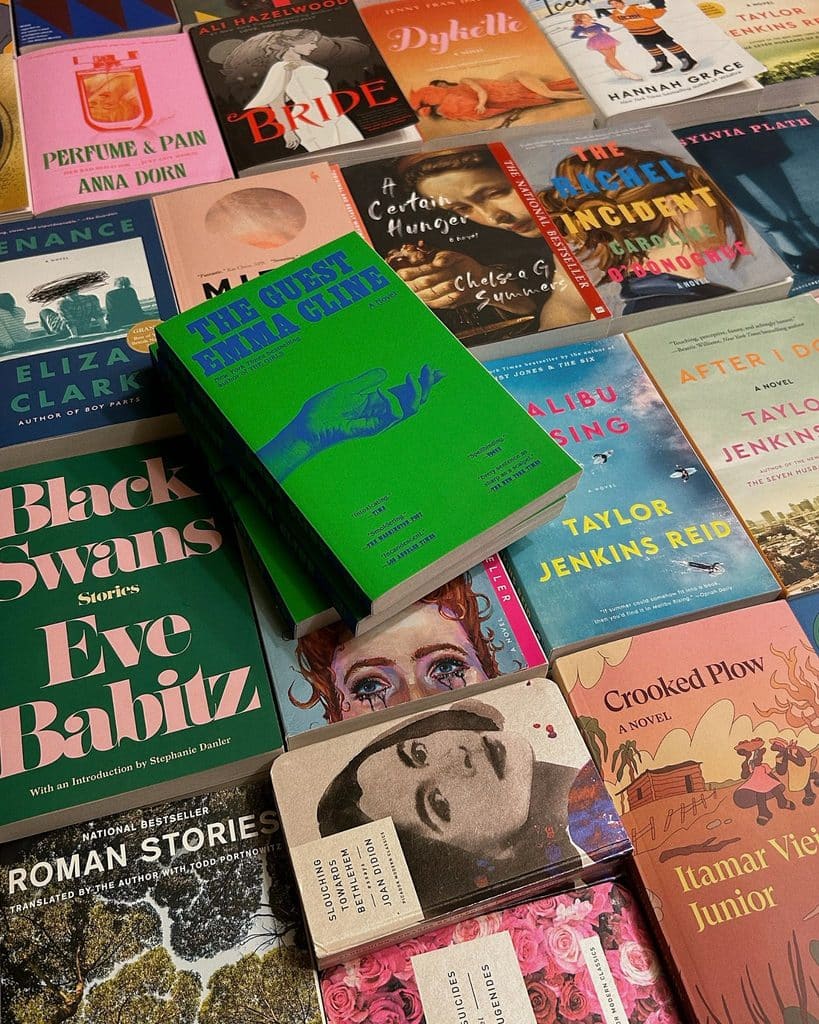
Fictional flatlay of women-authored books Image: Kelly Madu, Dupe
Unlike non-fiction, fiction resonates with readers in four main stages:
1. Identification: The reader establishes an emotional bond with a character or concept in the text and identifies with their experiences
2. Catharsis: Through the character’s journey, the reader indirectly experiences emotional release from a safe and removed position
3. Insight: The reader recognises similarities between the text and real-life circumstances, and can apply learned ideas to their own life
4. Universalisation: The reader transcends their sense of isolation, finding a collective framework for healing
It is my belief that this process of resonance is unique to fiction books, as their breadth and depth allow the reader to detect and understand the experiences of the ‘other’, feeling emotions as if they were their own, and ‘experience-taking’ from the plot of the narrative.
In order to illustrate the way each of these steps work in a process of Reading for Wellbeing, I would like to offer some examples from my own reading and that of my session attendees. It’s worth mentioning, however, that each book I highlight covers a vast range of subject matters that it would be impossible to touch on cohesively in the space of this article – but that’s not what Reading for Wellbeing is about. It is not academic; it is not supposed to be a test or a comprehensive analysis of a story. Bibliotherapy is about feeling, resonance, and the tools we can extract from a text to implement into our own lives and personal wellbeing.
Identification
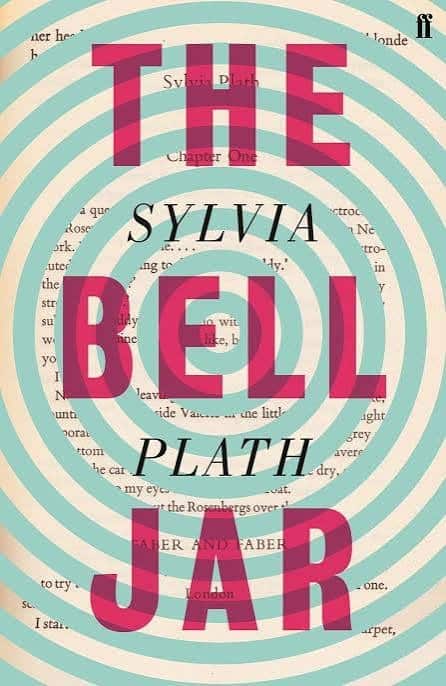
In the first stage of reading, identification, the reader may establish an emotional connection with a character or thematic element. In doing so, they may recognise their own suppressed anxieties subtly reflected back at them within the text.
A popular title within the Reading for Wellbeing circles I have held, particularly for women, is Sylvia Plath’s The Bell Jar. The image of Esther Greenwood sitting under the fig tree, for example, watching her ‘life branching out before [her] like the green fig tree in the story’ reflects the nostalgic euphoria of having one’s whole life ahead of them in their youth. Esther notes how, ‘from the tip of every branch, like a fat purple fig, a wonderful future beckoned and winked’, yet as she watches the figs grow, she stays sat ‘in the crotch of this fig tree, starving to death, just because [she] couldn’t make up [her] mind which of the figs [she] would choose’.
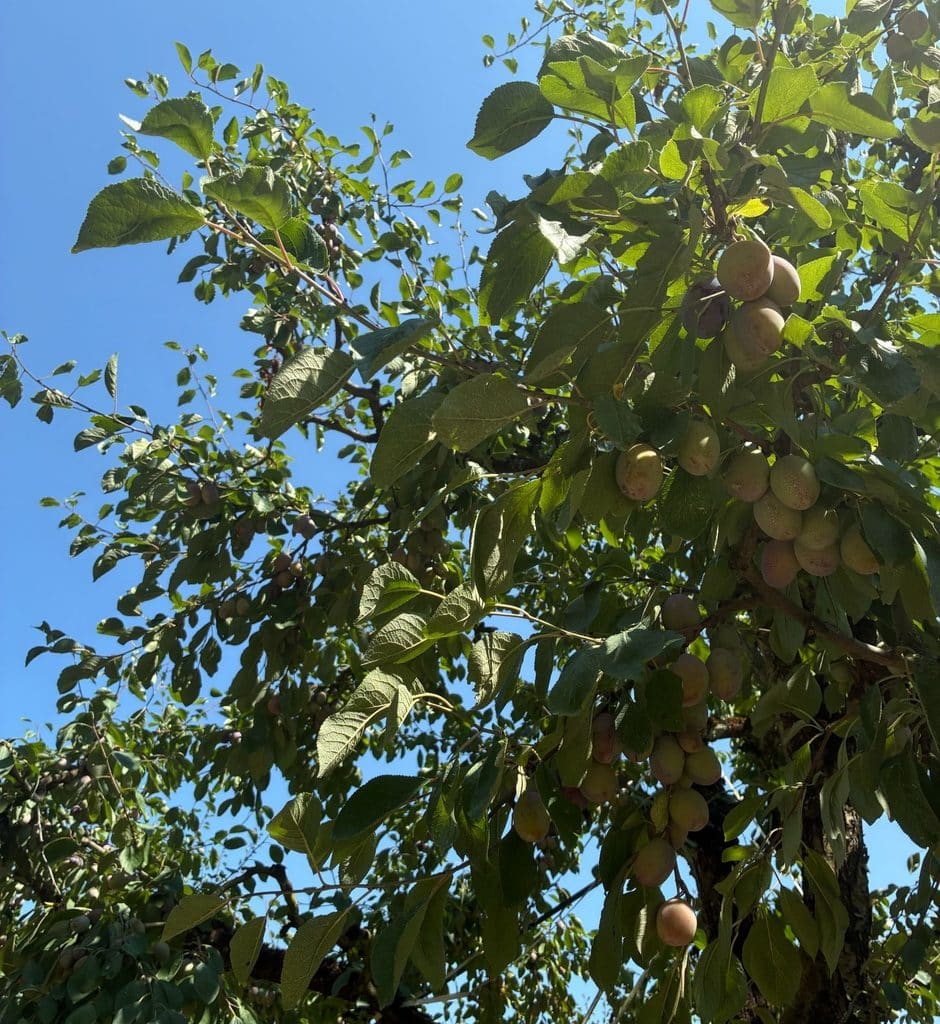
Fig trees at Les Jardins de Coursiana, Romieu, France Image: Manon Martini
I was struck, in the case of The Bell Jar, by how many readers identified with this story. We are all very different individuals with different life stories and experiences – yet this story resonates broadly. Some readers see a reflection of regret at not choosing a different path in their youth; some identify with a portrayal of societal pressure to pick one defined path; other readers identify with sadness that they never had a choice of figs in the first place; Most resonate with the question – is it too late to change?
The process of identification may seem frustratingly futile to some – as it offers no immediate help, no road map forward. One might question, ‘What is the point of identification if there is nowhere to go from there?’
In response, I turn to the question of empathy. What is empathy? How does it differ from sympathy? Can a book be empathetic, and if so, what good is an empathetic book?
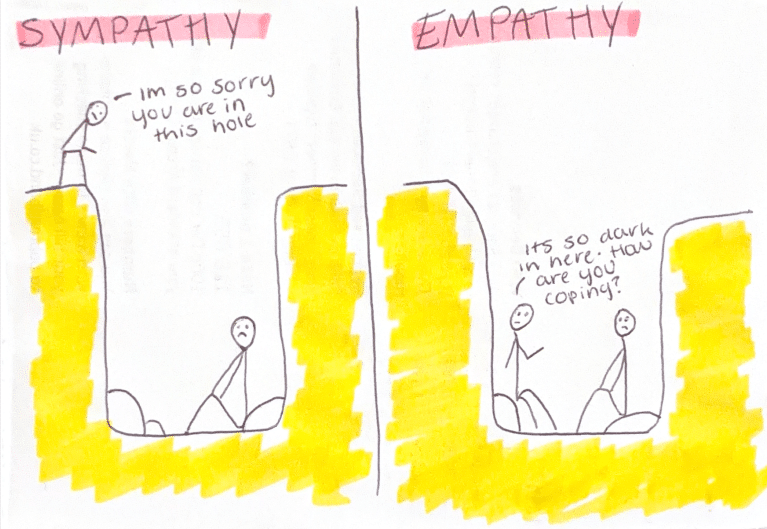
Sympathy vs Empathy Image: Manon Martini
If we visualise our feelings as a hole in the ground that we are stuck in, sympathy looks down at us from above and says ‘I feel for you’. Sympathy is a well-meaning, pitying concern from the outside in. Empathy, on the other hand, will climb down the hole, sit at the bottom with you and say ‘I feel with you’. Empathy is an experience of your perspective; it is right there with you, and it is empathy, or the right book, that can help you build a ladder out.
Catharsis
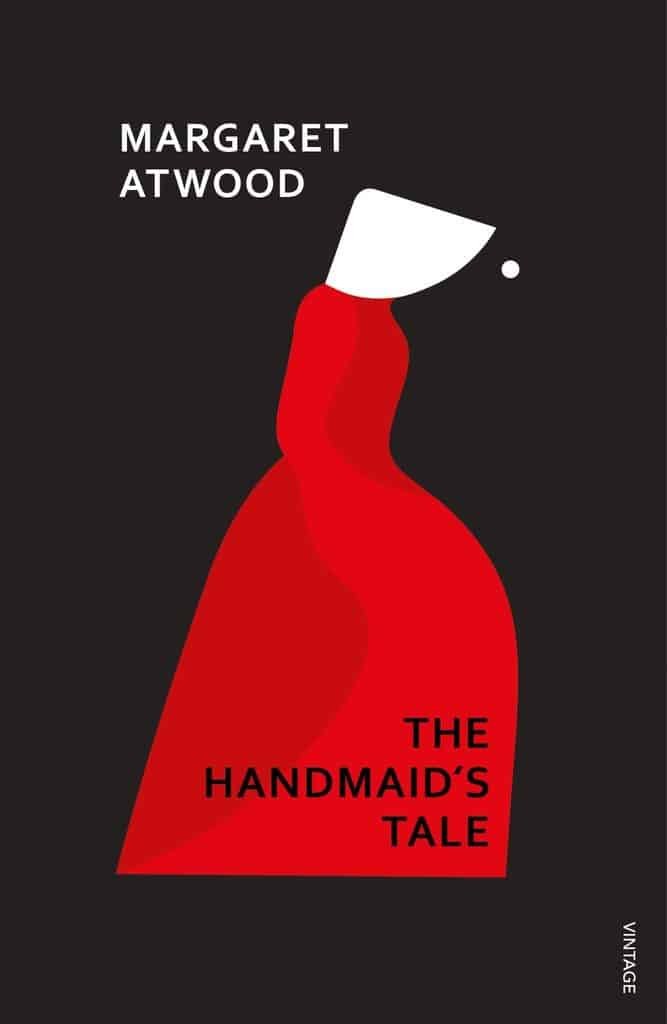
This brings us to catharsis. Once the emotional bond of identification has been built with the reader, the process of catharsis can begin.
Literary catharsis provides a safe, contained space for emotional release. Through narrative distance, we can confront our deepest fears: be it loss of control, bodily autonomy, systemic oppression, or powerlessness – without collapsing under the weight of ‘real’ life. The Handmaid’s Tale by Margaret Atwood, for example, has been noted by many as a narrative space of catharsis, particularly in an age of Trump, AI and climate catastrophe. This chilling feminist-dystopian novel certainly doesn’t cure these real-world anxieties on its own, but it does ‘metabolise’ them. Stories like these allow the reader to feel the full weight of anger, fear and oppression safely within the confines of fiction (even if it does painfully reflect their reality), and in doing so they can return to the ‘real’ feeling emotionally cleared and re-anchored.

Women’s March on Pennsylvania Avenue, 2017 Image: Vlad Tchompalov, Unsplash
One line I hear a lot when I speak to readers about The Handmaid’s Tale is the phrase ‘Nolite te bastardes carborun-dorum.’ In the book, Offred, our main protagonist, discovers the mock-Latin phrase etched into a dark hidden corner of her bedroom wardrobe in a world where women writing and reading is punishable by the loss of a hand or eye, respectively. It translates roughly to: ‘Don’t let the bastards grind you down’. When Offred discovers these words in the bedroom in which she is held captive as reproductive cattle for an upper-class couple, we’re engaged almost in a double layer of catharsis: Offred realises there was a handmaid here before her, and that she is not alone. Simultaneously, we as readers, too, realise we are not alone in our outrage.
The Handmaid’s Tale evokes such visceral anger for many readers because Margaret Atwood famously wrote the novel using a strict self-imposed rule: she did not include any atrocity or mechanism of control that had not already occurred in real human history. Reading The Handmaid’s Tale is to experience catharsis of horrific real-world behaviour under the patriarchy: from the hypocrisy of Serena Joy, an anti-feminist televangelist who gets trapped in a cage of her own making, to the small trickles of bureaucratic violence that slowly, seamlessly lead to the Republic of Gilead taking over, the book allows us to experience this sharp, burning fury in a way that can’t be done in ‘real’ life.

The New York Times and Financial Times newspapers on a stand in Paris, France Image: The Now Time, Unsplash
Much of the modern media and news outlets through which we hear of our changing world use fear as a primary driver of attention, persuasion and profit. We live in an era of algorithmic amplification and outrage economy, which means that the narratives of humanitarian atrocity we experience day to day can only be processed as fear and panic.
Whilst we may also feel anger at the headlines we see on a daily basis, the fictional form allows us, within the safe boundaries of the page, to feel the full spectrum of anger without being consumed by it or reduced to fear. The narrative acts as a pressure valve that clears our emotional palette and restores a grounded sense of agency that can lead to the next ‘step’ of Reading for Wellbeing: Insight.
Insight
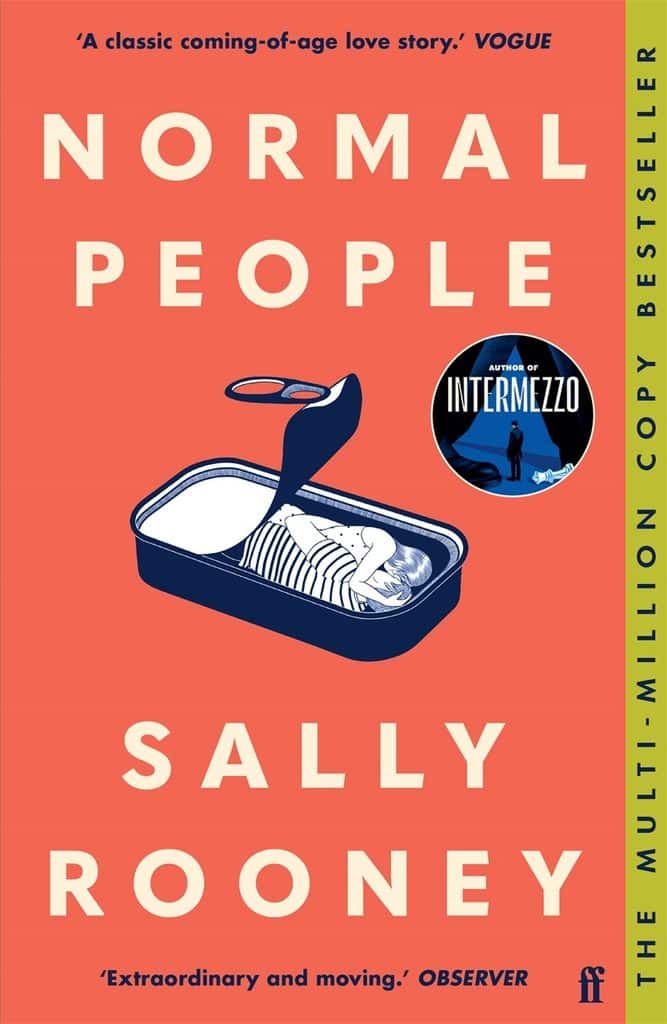
Following the release of catharsis comes insight. One of my all-time favourite books, and probably one of the most insightful when it comes to understanding human behaviour, relationships, hierarchy and communication, is Normal People by Sally Rooney. In Reading for Wellbeing, insight comes as a reflective stage when the cathartic dust has settled and the narrative lens pivots and focuses back towards the reader’s life.
Here, we synthesise the texts, characters, themes and structures and extract perspective to apply to our own circumstances. As with all the books discussed in this article, Normal People is entirely too complex in subject to be dealt with in this small paragraph – it’s about two young people, Marianne and Connell, their relationship, its class friction, its gender power, their difficulty to communicate and the transaction of their bodies. There is vast material here to pull from – but as I mentioned previously, that’s not what bibliotherapy is necessarily about. Whilst for many, literature may feel like an academic venture, Reading for Wellbeing simply asks us to capture small fragments of a novel, a theme, a character or a quote, and find the tool that you need within it.
With this in mind, a phrase that always stuck with me after reading Normal People, and one that I think might best summarise the themes of the book as a whole is:
‘All these years they’ve been like two little plants sharing the same plot of soil, growing around one another, contorting to make room, taking certain unlikely positions.’
In reading the trials and tribulations of these two young people who are clearly supposed to be together but can never quite make it work through missed opportunities, wrong turns and unspoken words – the image of them as two little plants crammed into the same plot of soil is a strong and insightful one. Whilst they may contort away or entwine, their roots will always remain as one.
Normal People has offered insight for me into difficulties in my own relationships. After reading the story, I was endowed with this sense that the way we communicate, both verbal and non-verbal, is tinted with layers of patriarchal and capitalistic messaging that shapes meaning. Being in relation with someone, romantic or not, is hard. Having an argument with someone you love who just doesn’t seem to understand what you are saying can make you want to bang your head off a wall. But in reading Normal People, I and many others are reminded of a sacred piece of insight: we are one.
Rooted in the same soil and contorting through a frame of communication that is much bigger than ourselves. Sally Rooney tackles macro structures of inequality, capitalism and patriarchy through a very micro lens. In doing so, she offers insight through which we might gain a clearer diagnostic tool for our own relationships, learning to identify where fear, pride, suppression or expectation keep us trapped, and where sometimes communication must venture beyond language and towards the non-verbal if we are to truly come into conversation with the world around us.
Universilisation
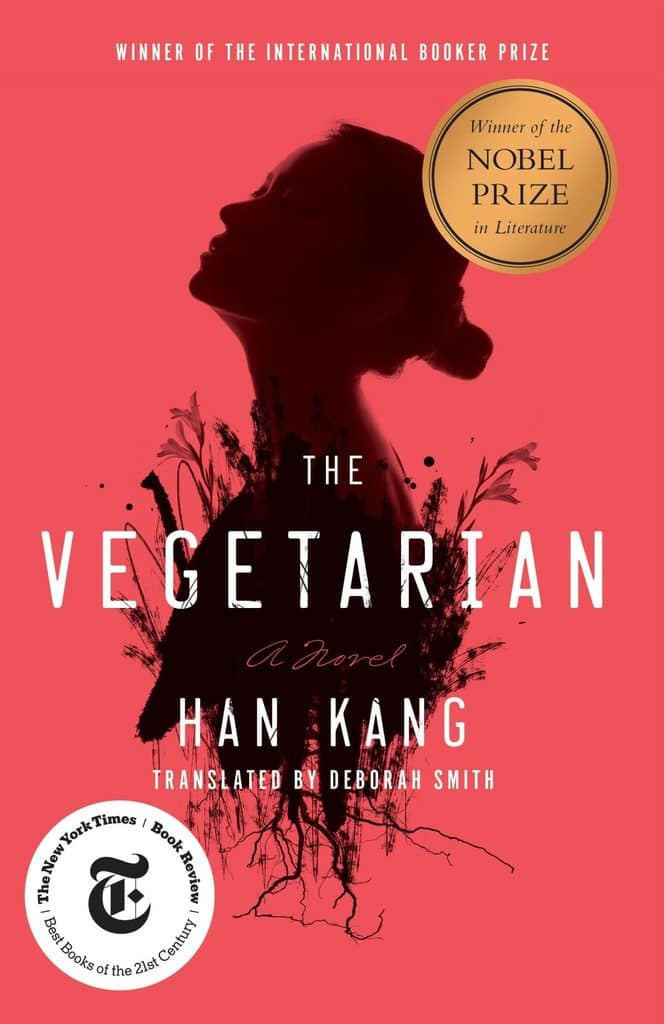
After insight comes the final phase of Reading for Wellbeing: Universalisation. This phase of reading lifts the reader out of personal isolation and integrates them into a collective framework or ‘roadmap’ for healing. Interestingly, the book doesn’t actually need to have a conventional ‘happy ending’ or a neat resolution for it to offer a road map to wellbeing. In a bibliotherapeutic setting, healing rarely comes from watching a character get a picture-perfect resolution – hence Mary Beard’s assertion that she hates the phrase ‘I just love reading’. Instead, universality comes at the moment of a shared truth. The realisation that another human being has felt the exact same depth of grief, rage or fear as you and has survived, and made it out to articulate the road map of their experience to you, the reader.

A lonely oak tree in Richmond Park, London Image: Simion Wilkes, Unsplash
Take The Vegetarian by Han Kang, for instance: the story of Yeong-hye, a dutiful homemaker in South Korea who controversially stops eating meat and animal products following a series of violent dreams about human cruelty. What begins as a dietary change becomes a radical act of metaphorical rebellion which is met by her husband, father and family with anger and abuse. Yeong-hye’s stark refusal to conform to the ideal of womanhood in modern-day Seoul, and her ultimate desire to transform into a plant, offers no easy answers. The story is odd, surreal and layered. But towards the climax of her transition from woman to tree, as she ‘roots’ herself in the ground and her body takes unlikely, tree-like shapes, Yeong-hye says to her sister:
“Look, sister, I’m doing a handstand; leaves are growing out of my body, roots are sprouting out of my hands… they delve down into the earth. Endlessly, endlessly”
In this moment, this ultimate transition from woman to nature, there is a universalisation of the urge to escape the claustrophobic expectations placed upon women and their bodies by men, our families, and society at large, and to embrace nature’s call. Yeong-hye’s trajectory is extreme and sometimes saddening, but it taps into our collective human threshold that acknowledges that our deepest crises as women are not private failures of isolated defects, but human responses to being pushed beyond our natural limits.
As her sister, In-hye, later accepts in the novel, ‘It’s your body, you can treat it however you please. The only area where you’re free to do just as you like.’ A sentiment long universally understood by women since the time of the suffragettes and long before. Universalisation occurs as a reader’s internal perspective shifts, and they move from a lonely: ‘Why am I like this?’ to a shared: ‘This pain is real, and I do not bear it alone’. Whilst the road to universalisation might not be clear, i.e., we cannot all just turn into a tree, universalisation allows us to look back at what we’ve read and pick up the tools we have learnt from our character, theme or arc: to lean into nature, to take possession of our own bodies, or to unfurl out of the suffocating pressures placed on us by the external world.
In this way, fiction grants us the ultimate gift of wellbeing: A light to hold in the dark, assuring us that even in our heaviest of sadness, we are connected to a wider tapestry of human experience, woven with a thread of a thousand wisdoms.
So, if you would like to use reading as another tool for increasing your own personal wellbeing, I encourage you to pick up a novel with the four pillars of Reading for Wellbeing (identification, catharsis, insight and universilisation) in mind. As you’re reading, ask yourself: What resonates? Why? What might you learn from your character, theme or quote? How does it relate to what you might be experiencing today? How did the character get through it? How might you?
If you would like further support with Reading for Wellbeing, I will be holding a group session with The Resurgence Trust on Monday 7th December, which I invite you to join. You can learn more about the practice of bibliotherapy by visiting the Psychology Today website.
If you would like to join Manon’s Reading for Wellbeing workshop with The Resurgence Trust on Monday 7th December, 7-8pm, you can book your tickets here:
https://www.tickettailor.com/events/theresurgencecentre/2438936/r/now
About Manon Martini:
Manon is an avid reader and book blogger on Instagram. She holds a Level 2 certificate in counselling skills, an MA in English Literature, and has an NCPS Quality-Checked Certificate in Bibliotherapy Skills.